WIF Sits Down With Grozdanova Sisters; the Filmmaking Sister Duo Who Helmed Western Feature: Eastern Western
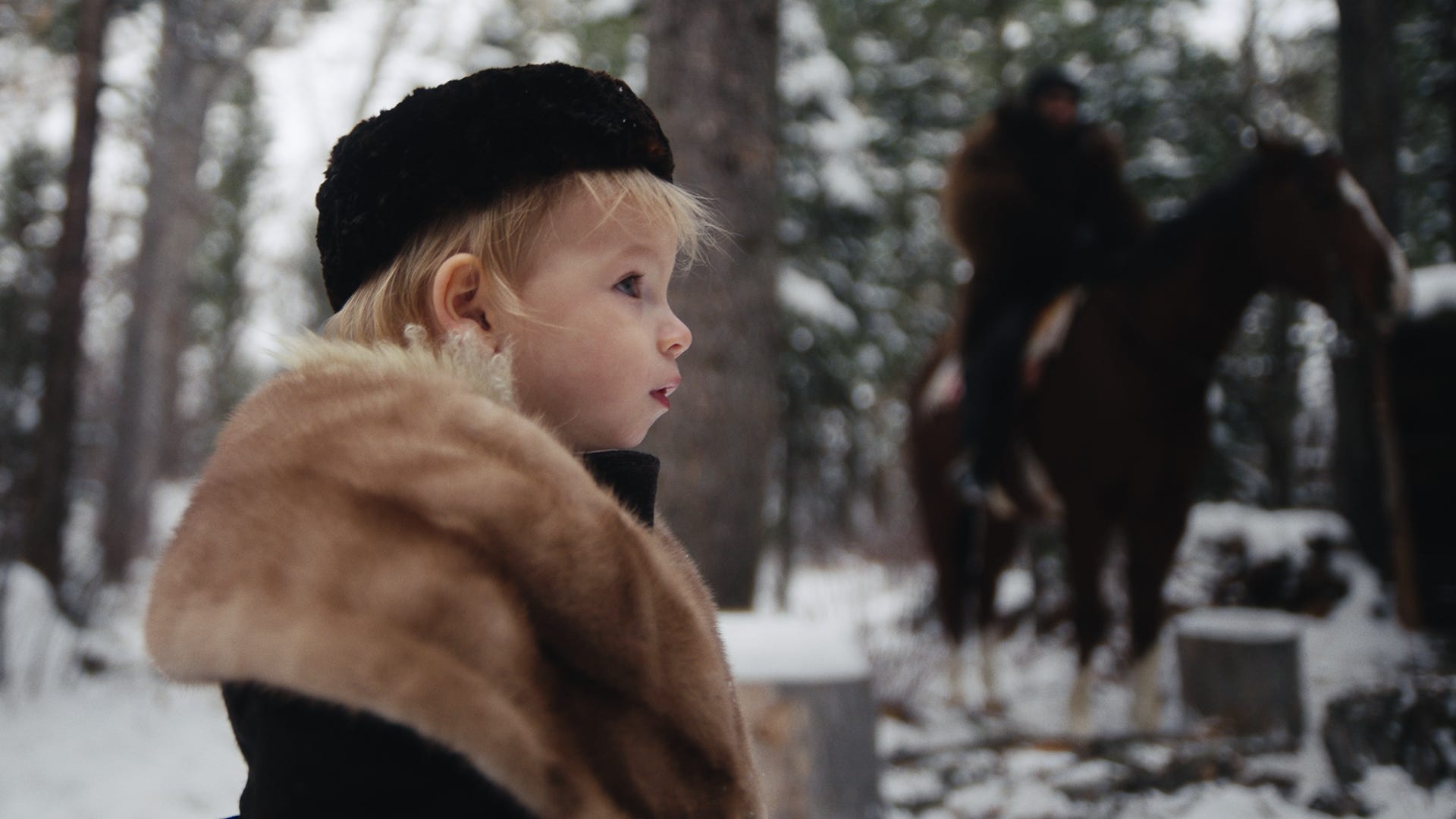
Synopsis:Eastern Western is the story of a son raised by two fathers, one from the European East and one from the American West, set on the cusp of the 20th century. Deep in the mountains of the American Frontier, Igor, an immigrant and recent widower, struggles to raise his two-year-old son Ivo in the harshness of winter. When Duncan, an American horse rancher and friendly acquaintance, decides to move his horse-breeding business and family to California, Igor and Ivo join the wagon train headed West. After a series of encounters with both friend and foe, Duncan is left with a decision that will affect the family’s future forever.
1.) Even though the main character is a man, the story is truly driven by a woman. Why was it important for you to make a female figure the heart of Eastern Western?
Marina: In our experience of our family’s immigration, which started in Bulgaria, a lot of the momentum came from our mother. Women have a good sense of the future, and they fight for the future they want – it’s in the female nature. In times of unrest, women are major catalysts of change, movement, migration. We decided that Igor’s wife would be his anchor and guiding force, and the bridge between East and West. His wife offers him a strong connection to his homeland, where their journey began, as well as to the future she wanted in America. Although she is physically absent from the story, her presence is always felt.
Biliana: We conceived Eastern Western as a father and son story because we were very much inspired by our longtime friend Igor Galijasevic and his real-life son, Leonardo. Igor’s path also led him from Eastern Europe to America, and as we were thinking about our first narrative film, what we wanted to say, who we wanted to cast, we very organically decided to approach him to be a part of this journey. We do hope, however, that when audiences watch Eastern Western, they might also question the idea of “main character.” This film, in our eyes, is truly delivered by an ensemble cast. It’s hard to say who the story belongs to, because it’s ultimately a story of interconnectedness.
2.) What advice would you give to emerging creators who want to tell personal or unconventional stories but aren’t sure where to start?
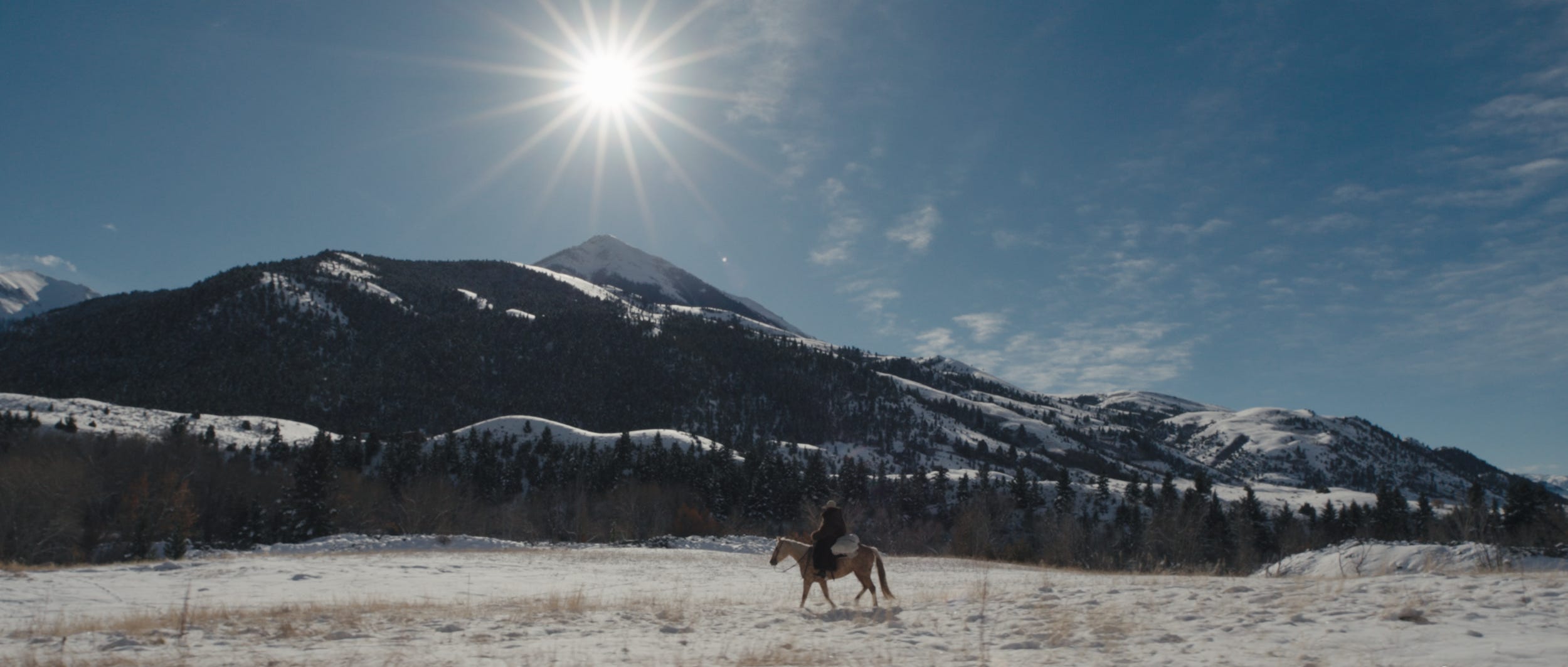
Marina: I would say follow the kernel of what excites you but challenge yourself with at least one major logistical aspect of your story, and let that help your story develop unconventionally, so to speak. For example, we chose to shoot almost entirely in the outdoors of Montana. It was the backdrop to our story, but also a major advantage to our narrative, as the characters move through these landscapes and the story develops. So what I mean is, assess your advantages and perhaps something less obvious will offer so much creative potential and exploration in the narrative. This way of working stems from our documentary background.
Biliana: To Marina’s point, work on maximizing your production value by curating everything on screen in a pragmatic way and stay flexible. You can’t point the camera in the wrong direction if you’re standing amidst the Montana wilderness. The vistas alone contribute to stunning imagery. We knew we wanted to make this film a period piece, but didn’t necessarily think of it as a Western at first. However, the choice came naturally. Imagine filming a period piece in the big city? Your budget skyrockets. Everything around you has to look the part: cars, buildings, extras wardrobe, etc. Whereas if you are in the middle of the prairie, a cabin and the wardrobe will get the job done.
3.) What did working together as a sister duo teach you about each other and your creative process?
Biliana: We have been working together as creative collaborators ever since I can remember, and we eventually made it official by starting our production company El Jinete Films in 2015. I think that over the years, we have learned a lot from each other. We have always worked as a team, and inevitably have become (I believe) better team players because of that dynamic. Filmmaking is a team sport. There is no room for egos, there is no room for “I,” and in our case it has just always been “we.”
Marina: We work to translate this sentiment on our sets. Creativity is all about communication, collaboration, and being a good listener. You have to trust each other and always know that two heads are better than one.
4.) How did your own experiences as immigrants shape the story, themes, or characters in Eastern Western?
Biliana: We always knew that our first narrative film had to be a “coming to America” story. We left Bulgaria at a very young age and primarily lived as outsiders in the many places we settled in. In the year 2000, we made the move to the United States, and ever since then, we have been discovering that America can either be a welcoming place, or a very harsh place, depending on many factors. Typically, the process of adjusting to a new land is easier for the children than it is for the parents, and this is one of the main themes we wanted to explore in Eastern Western. We also examine the connection to home, a home you might never see again, or a home you might never get to know in the first place. It was important for us to tell a generational story during a time when communication with the homeland was extremely difficult. We also chose the Western format because it’s essentially a genre as old as the medium of cinema, and it has clearly been lacking diverse perspectives. I recently came across a “Top 50 Westerns” of all time – 2 of them were directed by women, and needless to say the majority are not about women or any foreigners. We didn’t necessarily set out to buck any trends, but I am happy that the final result seems to be doing just that.
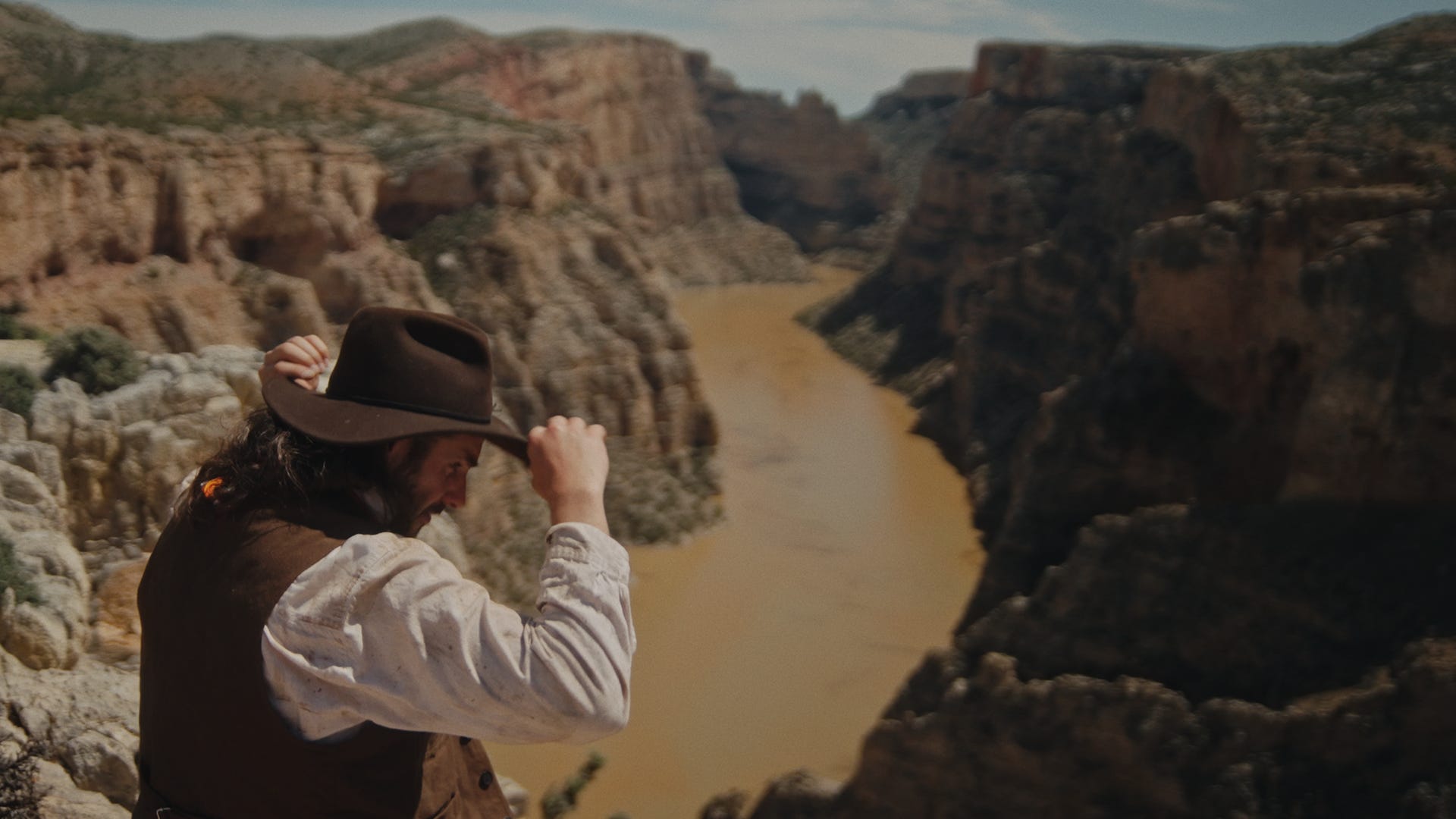
Marina: Being an immigrant is inherent to our identity as people, and therefore our identity and perspective as storytellers. This led us to tell a global story via a local perspective – of this immigrant father, and his son, and their journey in the American West. For me, immigration is the most telling experience of our global world – it is so specific to each person, but so universal. Therefore, everyone, in some capacity, has experienced or been witness to it. The history and development of the western frontier of America held so many immigrant stories that are not widely depicted in film, and so we decided to tell this story in the vastness of the American West. It does also serve as a representation of immigration at any point in history, because the struggles, relationships, emotions, and journeys of immigration are recurrent.
“Being an immigrant is inherent to our identity as people, and therefore our identity and perspective as storytellers.“
5.) What drew you to this story, and what do you hope audiences take away from it?
Marina: What drew us to this story was the ability to explore foundational relationships, between people, between people and animals, and between people and nature, during a pivotal span of time in the history of America. Through a very specific lens, we explore reasons and consequences of migration from many different angles, that of an Eastern European, an American family, a Native American, and even the forced migration of thousands of horses during wartime. We hope audiences can appreciate the levels of sacrifice that exist within the dynamics of these relationships.
Biliana: I hope there is something within this story for everyone to discover and connect with. As Marina says, this film is about characters from many different walks of life. I hope we were able to showcase that individual empathy can go a long way, and if we have the ability to help our fellow neighbor, human or animal, we should do so.
“I hope we were able to showcase that individual empathy can go a long way, and if we have the ability to help our fellow neighbor, human or animal, we should do so.“